


How Long Does an LED Pool Light Last? | Complete Guide to Pool Light Lifespan
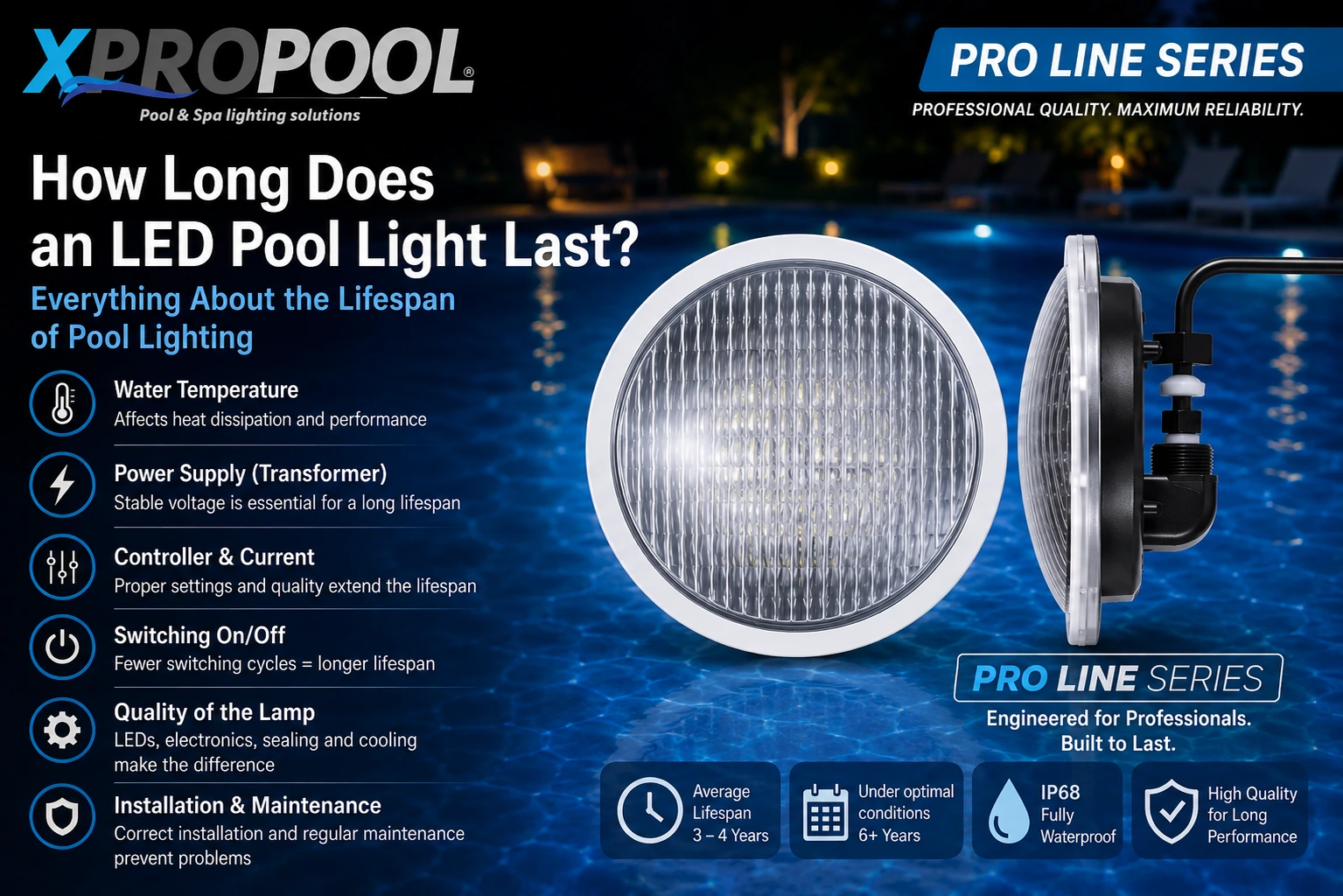
How Long Does an LED Pool Light Last? Everything You Need to Know About the Lifespan of Pool Lighting
One of the most frequently asked questions is:
"How long does an LED pool light actually last?"
The answer is not as simple as stating a number of operating hours. While manufacturers often claim LED chips can last up to 50,000 hours, the actual lifespan of a pool light depends on many different factors.
On average, a high-quality LED pool light will provide 3 to 4 years of reliable operation. With a properly designed installation, premium components, and normal use, a lifespan of 6 years or even longer is certainly achievable.
The longevity of a pool light depends not only on the light itself, but also on the complete lighting system.
1. The Right Power Supply Is Essential
The transformer is one of the most important components in any pool lighting installation.
Many older swimming pools were originally equipped with 300W halogen pool lights. When upgrading to LED lighting, the old transformer is often left in place.
Although this may seem like an easy solution, older halogen transformers do not always provide a stable output voltage. Voltage fluctuations and power surges can damage the sensitive electronics inside an LED pool light, significantly reducing its lifespan.
For the best performance, always use a transformer specifically designed for modern LED pool lighting.
2. The Controller Also Matters
For RGB and RGBW lighting systems, the controller plays an equally important role.
A high-quality controller provides stable power distribution and accurate control of the LEDs. A poor-quality controller or one that is not correctly matched to the lighting system can overload the electronics and shorten the life of the fixtures.
Using a compatible transformer, controller, and pool lights ensures reliable operation and maximum lifespan.
3. Water Temperature
Pool water naturally cools the light.
The higher the water temperature, the less effective the cooling becomes. Heated swimming pools, spas, and wellness facilities place greater thermal stress on the electronics.
Heat is one of the biggest enemies of LED technology. The cooler the operating temperature, the longer the components will last.
4. Daily Operating Hours
Like any lighting system, LED pool lights experience wear over time.
A residential pool that is illuminated for only a few hours each evening will generally enjoy a longer lifespan than commercial pools where the lights operate many hours every day.
More operating hours simply mean more stress on the electronics.
5. Frequent Switching On and Off
LED lighting handles switching much better than traditional halogen lamps, but every power cycle still places a small amount of stress on the electronic components.
Lights that are switched on and off dozens of times each day may experience a shorter lifespan compared to lights that operate for longer continuous periods.
6. Installation Quality
A professional installation prevents many common problems.
Important factors include:
- Correct cable sizing
- Waterproof cable connections
- High-quality connectors
- Proper transformer installation
- Suitable controller
- Stable power supply
Many lighting failures are actually caused by installation issues rather than the pool light itself.
7. Not All LEDs Are the Same
A pool light is much more than a collection of LED chips.
The quality of the LEDs directly affects brightness, heat generation, efficiency, and lifespan.
Premium LED chips maintain their brightness for many years and generate less heat than lower-quality alternatives.
The quality of the internal electronics is equally important. High-grade components provide stable performance and are much more resistant to voltage fluctuations.
8. Quality Differences Between Pool Lights
Not all LED pool lights are built to the same standard, even if they appear similar on the outside.
This is particularly noticeable with the widely available PAR56 LED pool lights featuring a domed front lens.
Many lower-cost models use inferior sealing materials and lower manufacturing standards. After several years, moisture or even water may penetrate the housing.
Once moisture reaches the internal electronics, corrosion begins to develop. The light may continue to operate for a while, but eventually it will fail completely.
A high-quality pool light uses better sealing technology, premium plastics, durable materials, and a superior manufacturing process to greatly reduce the risk of water ingress.
As the saying goes:
Buying the cheapest option can often become the most expensive choice in the long run.
9. Heat Dissipation
One factor that is often overlooked is thermal management.
Although LEDs generate much less heat than halogen lamps, the internal electronics still need efficient cooling.
Premium LED pool lights are specifically engineered to dissipate heat effectively, keeping the internal temperature lower. This extends the lifespan of both the LED chips and the electronic components.
An efficient cooling system can make a significant difference over many years of operation.
10. Pool Maintenance
Water quality also affects the lifespan of pool lighting.
Maintaining the correct pH level, proper water circulation, and balanced chlorine or salt concentrations helps protect seals, plastics, and metal components.
Poor water chemistry can accelerate material degradation and reduce the service life of the lighting system.
So, How Long Does an LED Pool Light Really Last?
The answer depends on all of the factors discussed above.
As a general guideline:
- Average lifespan: 3–4 years
- High-quality installation: 5–6 years
- Ideal conditions: 6 years or longer
Some pool lights fail after only two years due to poor installation or unsuitable components, while others continue operating reliably for seven or even eight years.
The difference almost always comes down to installation quality, component quality, and how the lighting system is used.
Conclusion
The lifespan of an LED pool light depends on much more than the light itself.
The transformer, controller, LED quality, internal electronics, heat dissipation, water quality, installation, and daily usage all work together to determine how long the system will last.
Rather than choosing solely based on price, invest in a high-quality lighting system with the correct transformer and controller. A properly designed installation will deliver years of reliable, energy-efficient performance while minimizing maintenance and replacement costs.
A beautifully illuminated swimming pool starts with more than just a great light—it starts with a complete, well-engineered lighting system.