


Why Do Swimming Pools Attract Insects?
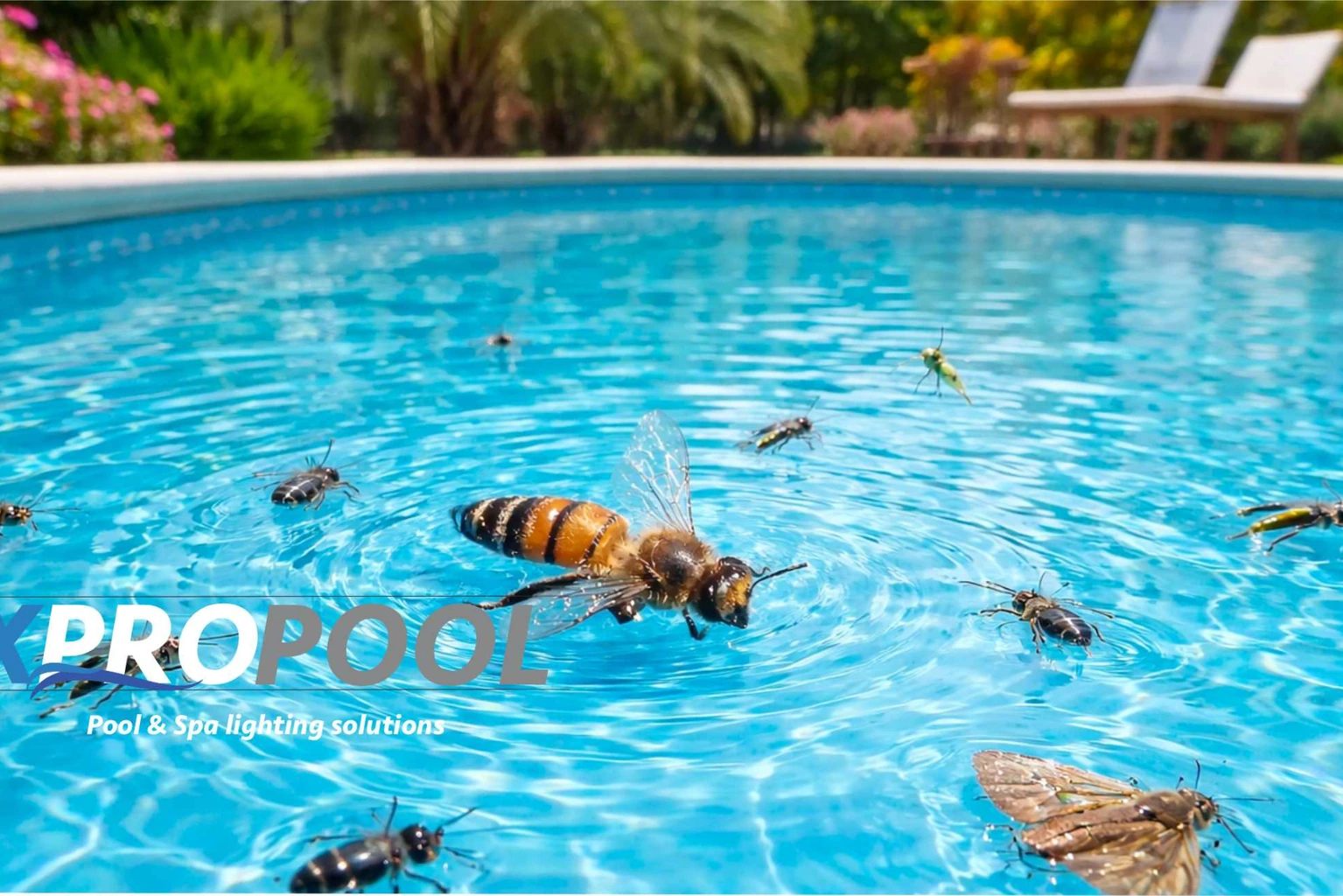
Imagine walking towards your pool, ready to relax and enjoy the water. Instead, you’re greeted by cloudy water, floating insects, or even insect remains. It’s frustrating—not only does it ruin your pool experience, but it also creates extra cleaning work.
So why do swimming pools attract insects? And how can you solve this problem? To understand this, we first need to look at which insects are commonly found in pools.
Common Insects Found in Swimming Pools
Flies and Bees
During the day, flying insects such as flies and bees often end up in the pool. This usually happens by accident when they are searching for water or food. Since they cannot swim, they eventually drown.
Moths and Night Insects
At night, small insects such as moths become more active. Many of these insects are attracted to light (phototrophic behavior).
They are especially drawn to:
- bright lighting
- cool white or blue light
- light sources with UV components
While flying around the pool, they can become exhausted or disoriented and fall into the water.
Mosquitoes
Mosquitoes are one of the biggest problems. They thrive in stagnant water and lay their eggs in:
- poorly maintained pools
- standing water
- water with organic debris
Warm temperatures and nutrient-rich conditions make pools an ideal breeding ground.
Why Do Ponds Attract Fewer Insects Than Pools?
The reason is simple: a pond is a natural ecosystem, while a swimming pool is not.
In a pond:
- fish and frogs eat insects
- aquatic plants improve water quality
- a natural balance is maintained
This ecosystem keeps insect populations under control.
A swimming pool, on the other hand, lacks these natural predators and balance.
Is It Possible to Completely Prevent Insects?
Short answer: no, not completely—unless you fully cover the pool.
However, you can significantly reduce the number of insects by taking the right measures.
Practical Ways to Reduce Insects in Your Pool
1. Use the Right Lighting (LED)
Lighting plays a major role.
LED lighting:
- produces very little heat
- emits no UV radiation
- is less attractive to insects
? This makes LED the best choice for pool and garden lighting.
2. Keep the Area Clean
Organic waste attracts insects.
Regularly remove:
- leaves
- debris
- rotting material
This prevents insects from breeding and gathering around your pool.
3. Maintain and Trim Plants
Overgrown plants create:
- shaded areas
- humid zones
- hiding places for insects
Keep plants trimmed and prevent leaves from falling into the pool.
4. Avoid Planting Flowers Near the Pool
Flowers attract:
- bees
- butterflies
- other insects
This increases the chance of insects ending up in the water.
5. Use Insect-Repelling Plants
Certain plants help repel insects, such as:
- mint
- lavender
- lemon balm
These can reduce insect activity around your pool.
6. Maintain Good Water Quality
Clean water is less attractive to insects.
Important factors:
- proper filtration
- correct chlorine levels
- continuous water circulation
Stagnant or dirty water is highly attractive to mosquitoes.
Conclusion
Insects in your pool are annoying, but they are manageable.
By:
- using the right lighting (LED)
- keeping your pool and surroundings clean
- managing plants and water quality properly
you can significantly reduce insect problems.
The key is prevention: the less attractive your pool is to insects, the fewer you will have to deal with.
This way, you can enjoy a clean, clear, and comfortable swimming pool once again.