


How Deep Should Pool Lights Be Installed?
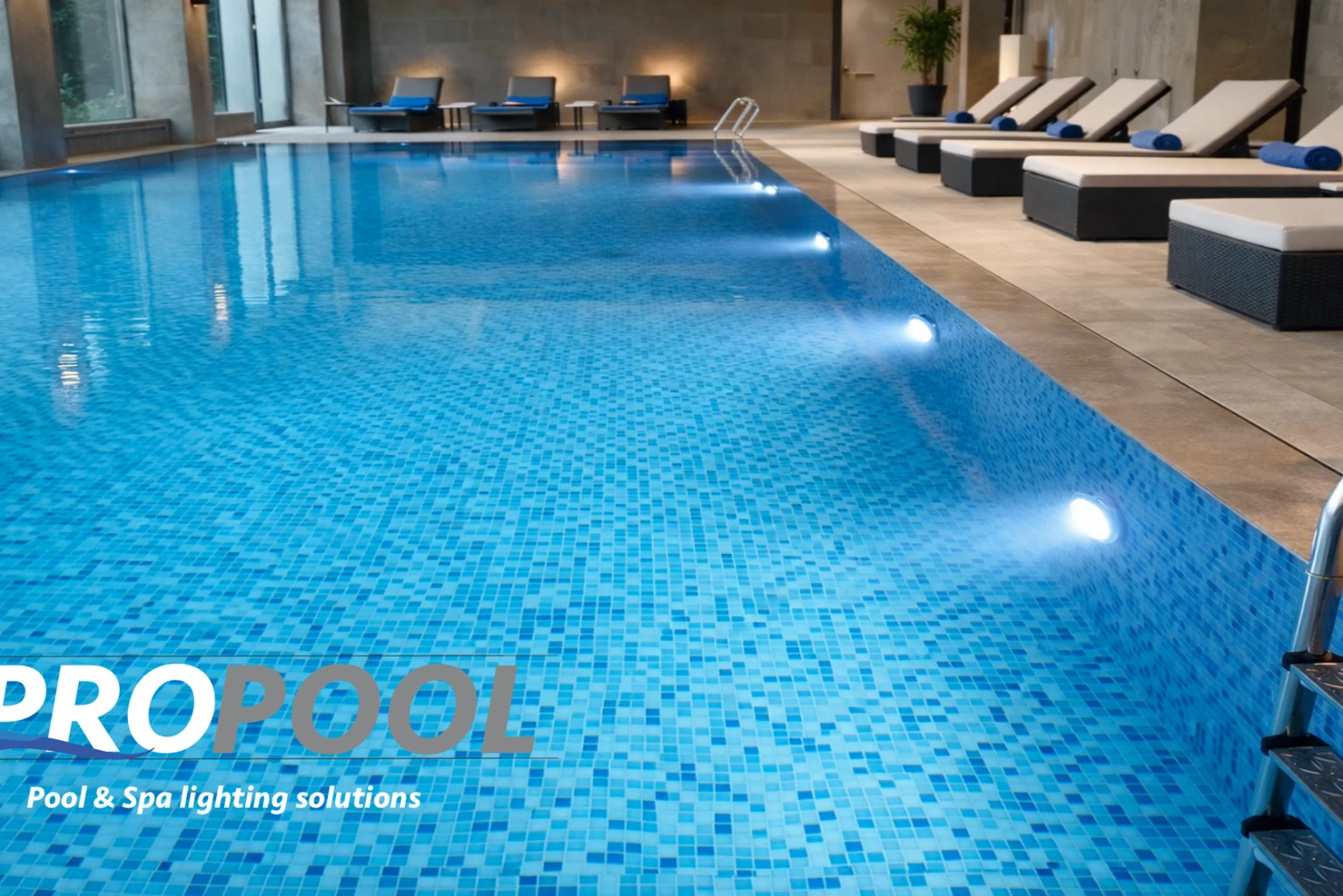
The correct installation depth of pool lighting is a critical technical factor that directly affects safety, light performance, equipment lifespan, and maintenance costs.
When designing or renovating a swimming pool, lighting placement should never be treated as a minor detail. The depth at which underwater lights are installed determines not only illumination quality, but also long-term reliability and compliance with electrical safety standards.
This guide explains exactly how deep pool lights should be installed and why it matters.
Standard Installation Depth for Pool Lighting
In most residential and commercial pools, underwater lights are typically installed:
9 to 18 inches (23 to 46 cm) below the water surface
This range is widely accepted internationally and provides the optimal balance between:
-
Electrical safety
-
Proper light distribution
-
Effective heat dissipation
-
Service accessibility
The exact depth may vary depending on:
-
Pool construction (concrete, liner, fiberglass)
-
Light type (PAR56, nicheless, stainless steel recessed, etc.)
-
National electrical regulations
Why Installation Depth Matters
1. Electrical Safety Comes First
Pool lighting is underwater electrical equipment and must comply with local electrical codes (such as NEC in the United States or European standards).
Key safety requirements include:
-
Use low voltage systems (typically 12V or 24V AC/DC)
-
Install an approved isolation transformer outside wet zones
-
Ensure proper grounding and bonding
-
Use only fixtures rated for permanent submersion (IP68)
Incorrect installation depth may increase the risk of unsafe exposure or improper cooling.
2. Waterproof Rating (IP68 Is Essential)
All permanent underwater pool lights must be rated:
IP68 – Suitable for continuous submersion
Lower ratings are not designed for long-term underwater operation and can result in:
-
Water intrusion
-
Short circuits
-
Corrosion
-
Premature driver failure
3. Optimal Light Distribution
Installation depth directly affects beam spread and visibility inside the pool.
If installed too shallow:
-
Glare may occur at the water surface
-
Reflections may reduce underwater visibility
-
Illumination may appear uneven
If installed too deep:
-
Dark zones may develop
-
Light efficiency may decrease
-
Maintenance access becomes more difficult
Proper placement ensures balanced illumination of the pool floor, walls, and steps.
Functional Lighting vs. Ambient Lighting
Functional Lighting (Safety-Oriented)
Purpose: ensure safe nighttime swimming.
Characteristics:
-
Clear visibility of pool bottom
-
Even wall illumination
-
Minimal shadow zones
Functional lighting typically benefits from placement within the middle of the recommended depth range.
Ambient / RGB Lighting
Purpose: atmosphere and design aesthetics.
Characteristics:
-
Color-changing systems (RGB / RGBW)
-
Dynamic lighting scenes
-
Highlighting architectural features
Ambient lighting depth may be adjusted strategically to enhance visual effects.
Heat Dissipation and LED Lifespan
LED pool lights generate heat during operation. Surrounding water acts as the primary cooling medium.
Proper installation depth ensures:
-
Continuous water cooling
-
Stable operating temperature
-
Extended LED and driver lifespan
If installed too close to the water surface:
-
Cooling efficiency decreases
-
Internal components may overheat
-
Driver failure may occur prematurely
Thermal management is one of the most overlooked yet critical aspects of underwater lighting.
Maintenance and Accessibility
A practical installation principle often followed is the:
“Arm’s reach principle”
The light should be serviceable without draining the entire pool.
If installed too deep:
-
Maintenance becomes complex
-
Diving equipment may be required
-
Service costs increase
Properly installed niche systems allow the light fixture to be removed and brought to the pool deck for servicing.
Conclusion: What Is the Ideal Depth?
The recommended installation depth for pool lighting is:
9 to 18 inches (23–46 cm) below the water surface
However, the ideal position is not a fixed number. It should be determined by balancing:
-
Electrical safety standards
-
Lighting performance
-
Thermal management
-
Ease of maintenance
Every pool project requires a tailored approach.
Professional Installation Recommended
Pool lighting installation is specialized electrical work and should always be performed according to local regulations by qualified professionals.
Regular inspection and maintenance ensure:
-
Maximum safety
-
Optimal illumination
-
Long equipment lifespan
-
Lower total ownership costs